Category: Uncategorized

  • Bulthaup Kitchen

    Bulthaup Kitchen

    We went with Bulthaup to design and manufacture our kitchen and we are thrilled with the results.

    We wanted a clean, modern kitchen with European design and sleek fittings. We visited the showrooms in and around Boston for not only Bulthaup, but also Pedini, Poggenpohl, and SieMatic. Each had good points but we felt the combination of design, quality, price, and the staff at the showroom at Bulthaup was best for us.

    Once we signed the agreement, we worked with the designer to create exactly what we were looking for.

    We’re loving the design of the cabinetry, the soapstone countertops and the layout. This is our finished kitchen.

    IMG_6701


    There were a lot of decisions to make. Fortunately our Bulthaup designer worked with us at every step of the process. The photo below is the Bulthaup Boston showroom.

    Bulthaup showroom

  • The importance of planning ahead

    The importance of planning ahead

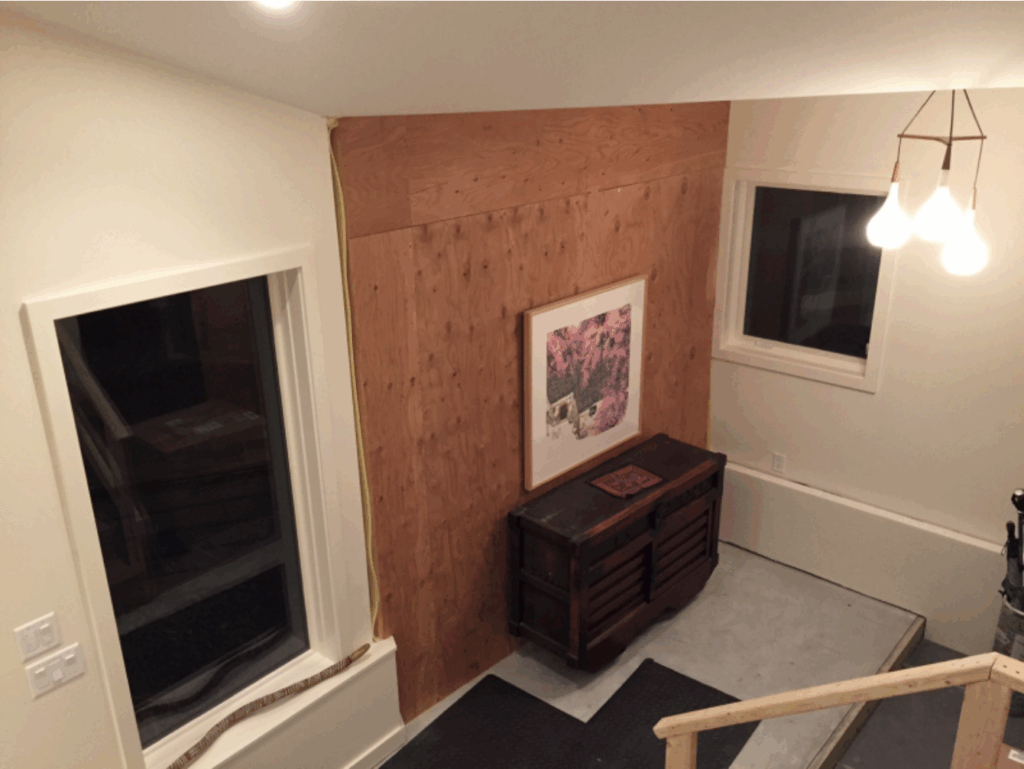
    More than a year ago, we climbed a ladder and walked the second floor of our addition while it was in a very rough format with Mark Tierney, our master electrician. We were looking for what seemed like mundane things like where power outlets should be placed.

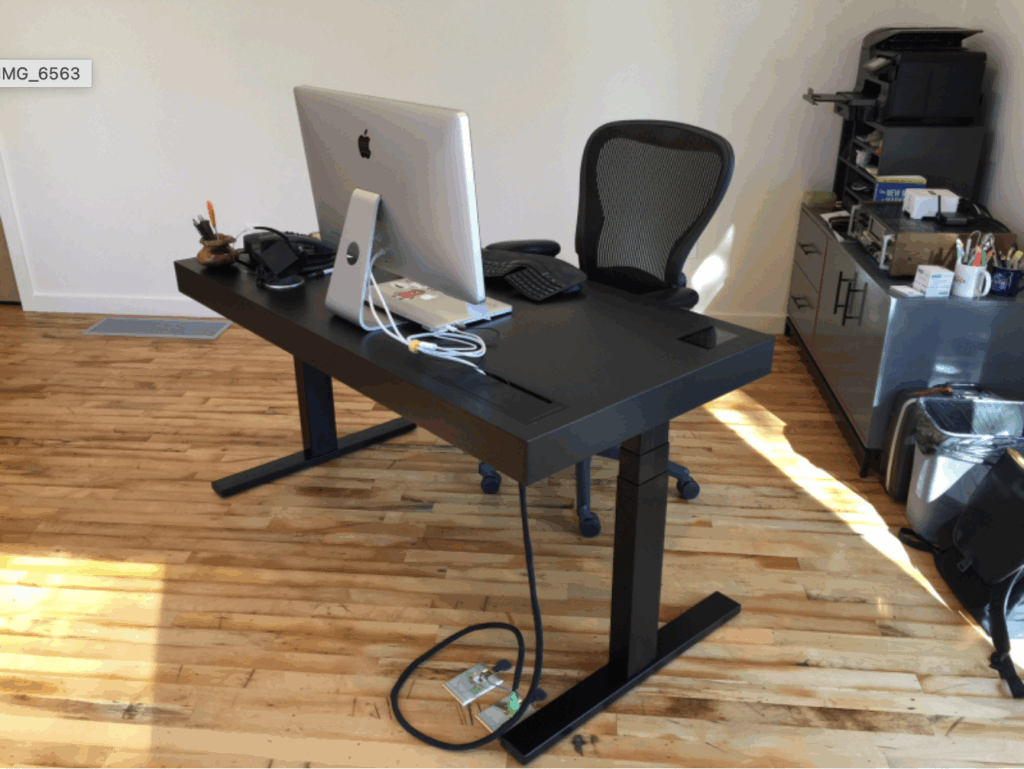
    I’m glad that I took this process seriously. I took time to consider how I would use me new office and ended up making a decision on desk placement, which led to having power and data connections built into the floor. Wow! It looks so much better than having cords snaking around the place or forcing the desk to the wall.

    I also decided on the placement of my good old analog sound system (A 1980s McIntosh power amp with 1970s speakers that were originally used in the Grateful Dead’s Wall of Sound). We were able to string speaker wire in the walls and use banana plugs via wall outlets eliminating the usual speaker wire in the room.

    Now that I’m in the office, those decisions made so long ago have proven really valuable.

    IMG_6563

    IMG_6565

  • We Now Have One House

    We Now Have One House

    After a year of construction, the barrier between the original Techbuilt house and our new addition has been removed.

    We chose to live on our house during construction. This proved a challenge because we didn’t want to get in the way of the builders.

    When we first started construction in November 2015, a barrier was built between what would be the new part of the house and the original part. In July 2016 we moved over to the new side and the barrier was rebuilt so the builders could renovate the existing Techbuilt house. The barriers served to allow for a living space for us separate from the construction on the part of the house.

    This week, the barrier was removed and the main floor installed. For the final two months of construction, we’re in one house! 

    House separation wall

    House opened up

  • Old Garage Becomes a Storage Room

    The most frequent question we’ve received during the (so far) year-long construction project has been “What are you doing with your old garage?” A variation on this I heard a few times was: “Why do you need 5 garages?”

    No, we don’t have five cars. The new 3-car garage built as part of the addition is the only garage. This will get all three of our cars indoors for the first time in 20 years living in Lexington.

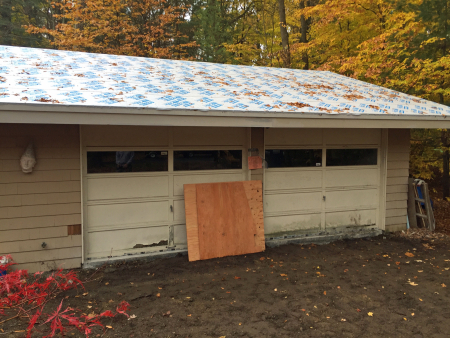
    This week the team removed the two old garage doors, re-sided the wall, and are ready to install two new windows. This space is being re-used as a large storage area.

    Those who own Techbuilt homes (or are considering purchasing a Techbuilt) know that there is very little storage in these homes. These houses were built on slabs and have no attic. The closets are tiny. It means that stuff collects and that can ruin the midcentury modern aesthetic.

    Woo Hoo! We will now have tons of storage!

    One challenge with the design was that we didn’t want this change to scream: “This is an old garage!”

    We solved that by making the design asymmetrical. Had we installed the two windows in the positions of the old garage doors, it would have been a constant reminder of what the space used to be. Now it will blend in to the landscape in a more natural way.

    In the Spring we will be landscaping to help hide this area.

    IMG_6140

  • Japanese Influenced Hardscape

    We’ve always loved Japanese rock gardens. When we lived in Tokyo, every day I walked past the Nezu Museum and admire see their rock entrance. Frequently I’d go into the museum and spend time in the wonderful garden.

    We worked with Chris Bailey at CS Bailey Landscape on landscape work. We did a few plants but the majority of planting happens in the Spring. This Fall we focused on hardscape.

    Between our vision and Chris’ expertise, we worked up a wonderful Japanese influenced hardscape.

    The front entrance has correct Feng Shui with the entrance walkway curving towards the front door so that you approach facing the door. We re-used some rocks and a stone lantern from our original front entrance.

    The back courtyard area is particularly interesting. Chris’ team installed an underground drainage system and some cool rocks that were either dug up upon excavation onsite or were part of the old entrance rock garden. It looks particularly great in the rain.

    The “waterfall” from the “V” in the roof hits one rock on the side so that the effect looks natural and not forced. And all the water disappears even in a downpour.

    The gray river stones from Mexico turn nearly black in the rain and are multicolor as they dry. 

    IMG_6053


    IMG_6057


  • Removing the Old Driveway

    The old garage was added to the original Techbuilt house in the 1970’s. Because it is not original from the 1950’s we are repurposing the old garage into a storage room. In the next several weeks, the old garage doors will be removed and several windows installed.

    This week, the old driveway was ripped up. We will add soil to make some natural looking contours in the area where the old drive was so that over time as the area grows over, it doesn’t look like a driveway was there.


    Old driveway

  • Partially Smart Home

    Our project has allowed us to consider using smart (internet enabled) products in our newly designed home. There are many products on the market that allow your mobile device to control systems in the house.

    Some systems including music, thermostat, and doorbell made total sense to use our iPhones to control. But we rejected many ideas because they were too costly and we felt that the old-timey manual version would be fine.

    Smart blinds seem wonderful, but the added cost for the motors on each blind was a lot of money. And we didn’t imagine that the automated feature of blinds going down when the sun was at a certain angle was worth it. So we got good quality blinds, but we raise and lower them the traditional way.

    Similarly, with lighting, it is easy to spend hundreds of thousands of dollars on systems to control lights in every room from the iPhone. So we rejected this too, mainly because of cost. Although we did go with several Lutron Pico wireless remotes to control some lights. For example we have wireless remotes that we keep in our cars to turn the outdoor lights near the garage on and off.

    Cool things to control with our iPhones

    Here are the systems we chose and so far they are working great.

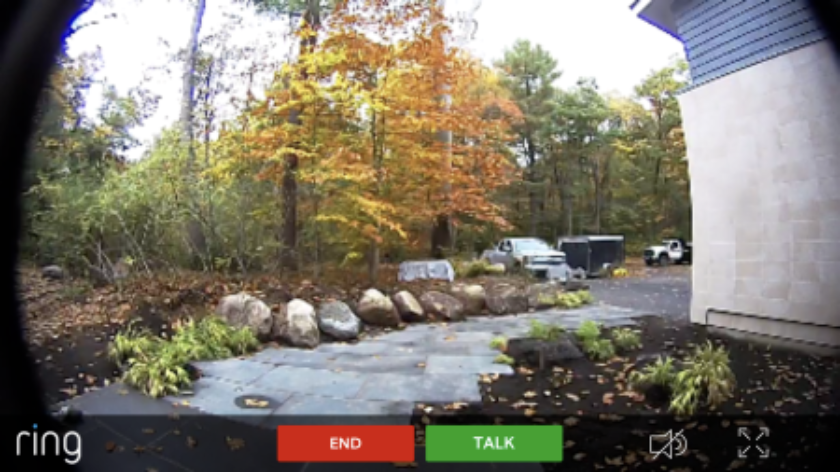
    Ring Video Doorbell Pro is an amazing device. The doorbell has a video camera so when someone presses the button, our iPhones pop up live video of who is at the door. We can choose to can talk to the person no matter where we are in the world. There’s also a feature to activate the camera at any time. So if I’m traveling I can see if there is snow on the ground at home and if it has been shoveled.

    IMG_5940

    Sonos Wireless Music System allows me to control my music to speaker systems in various rooms all from my iPhone. I can play the same music in all rooms or mix it up. Great stuff.

    Nest Learning Thermostat learns what temperature you like and builds a schedule. It knows when you are in a room or not and heats and cools accordingly. It’s also a sleek design that fits in well with our new home.

  • At Home with Tomorrow

    At Home with Tomorrow, by Carl Koch, designer of the Techbuilt house with Andy Lewis is a very rare book published by Rinehart and Company in 1958.I was lucky to score an excellent example of this book. It’s fun to page through it to learn about Koch and the design philosophy he used to build our original house. We used this knowledge to ensure our renovation and addition adheres to Koch’s principals.


    At Home with Tomorrow

    The book is 208 pages in black cloth with a dust jacket in color. There are black and white illustrations, diagrams, models, and plans throughout with primary photography by Ezra Stoller. The book was only published in a first edition.

    Besides the Techbuilt house, Koch was also the designer of The Industrial House, The Acorn House, The Mighty House and Lustron and Conantum, all of which are covered in the book.

    I found a copy for sale with an excellent write-up which I draw from here:

    Carl Koch was a pioneer in the prefabricated housing movement after World War II. When the veterans came home from World War II, eager to use their VA loans to put roofs over the heads of their families, America’s new suburbs bloomed with varieties of updated traditional houses. While most buyers preferred a vaguely “Early American” look, the prolonged building drought brought on by the Depression and the war years had interrupted another architectural trend that was now poised to make postwar reentry.

    The Modernist Movement, springing from primarily Germany via the Bauhaus, had formed tentative roots in 1930s America. Before the war, Walter Gropius, Marcel Breuer, and Ludwig Mies van der Rohe accepted positions on the faculties of some of this country’s most prestigious architectural schools. There, they trained a generation of students in the discipline of Modernist design. In the process, they changed the way houses would look and the way Americans would look at their houses. The Modern approach to design was in every sense more than a style–it was a cause.

    Not all modern houses followed the strict, rectilinear forms favored by the Bauhaus and the International School. Most people preferred to come home to a less rigidly geometric environment. They wanted clean lines and glass to bring the outdoors in, or to move the indoors out. They wanted rooms with a minimum of walls, so that living areas flowed easily into each other and blended effortlessly with their surroundings. They wanted their home to be oriented toward the back–not the front–of its building lot, with rear-facing walls of glass borrowing visually from the outer spaces.

    Techbuilt Houses, partly prefabricated, were not-too-modern houses designed by architect Carl Koch and built with considerable success in the 1960s. They demonstrated once again that mass-produced, standardized building parts could be put together in highly individual ways.

    Ironically, the Modern house may be about as popular today as it was in the 1950s. In fact, now that 1950s suburbs are finding their way onto local, state, and national lists of historic landmarks, they have a trendy cachet that just may be even brighter than it was half a century ago.

    Here is the original Kirkus Review of At Home with Tomorrow published on June 16th, 1958

    The designer of Techbuilt House, in discussing his career in home design and the future of design and production of homes for people of moderate income, is concerned with: the industrialized house as a unit; the relation of house to land and community; the interests of the family is selecting and making use of their home; history and present state of prefabrication as an industry; the ways in which architectural designs are influenced by the broad characteristics of the times. He maintains that the largely deserved disrepute of the prefabricated house is due to inadequate implementation of a sound idea and that basically, in the prefab” lies a hope of happy, healthy, ‘good’ surroundings for millions of families.” A useful primer.

  • Home Gym

    We have exercised regularly for many years. While we love being outdoors to run, mountain bike, swim, and surf, the long cold Massachusetts winters mean that for many months in the year we need to stay fit indoors.

    In the old house, the family room doubled as our exercise area. While it worked okay, we always wanted a separate room to work out in.

    The new house now as an awesome home gym.

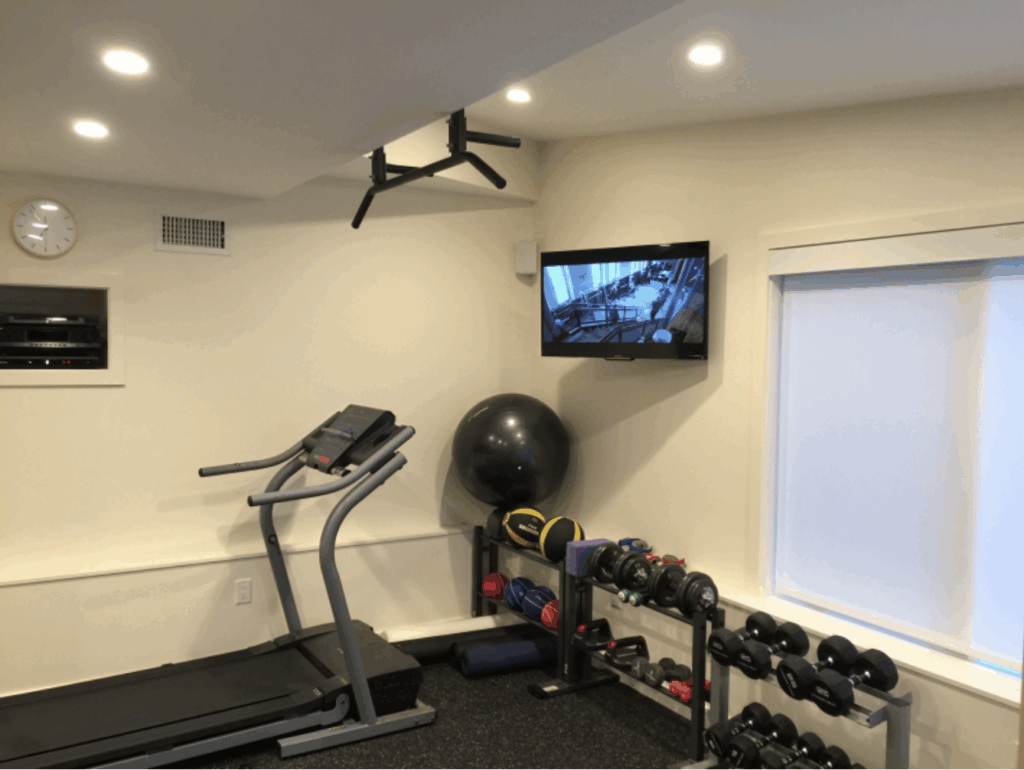
    We’ve got a treadmill, weights, a pull-up bar, yoga mats, and an excellent TV and sound system. In the several weeks since the gym has been completed it’s been used every day that we’ve been at home.

    Home gym


  • New Steel Beams to Open Up the Techbuilt House

    Our original Techbuilt house was set up when built in 1958 with six rooms. We had four bedrooms upstairs. On the ground floor there were two rooms – we enjoyed a large living room with dining area and a kitchen, which was separated by a wall.

    The design for the renovation of the existing house calls for a master suite upstairs and one large living area with kitchen downstairs. In place of two of the bedrooms, we’ve opened up the area to make a cathedral ceiling.

    Moving steel

    There were lots of structural issues to take the six-room Techbuilt home and make it two rooms by eliminating half of the second floor.

    Our architect, Joe Welch from C/W Design in Lexington, MA and our builder, Dylan James from Patriot Custom Homes in Burlington, MA worked together to use steel beams to hold up the new configuration.

    It was fascinating to watch the steel being installed.

    I love the industrial look, so we will leave the beams exposed (likely painted black or dark gray).


    Steel